
Forged in Niigata
Since 1985, Global knives have been made the same way in the same Japanese workshop. One designer, one forge, one standard that hasn't needed to change.
A Brief, Then Forty Years
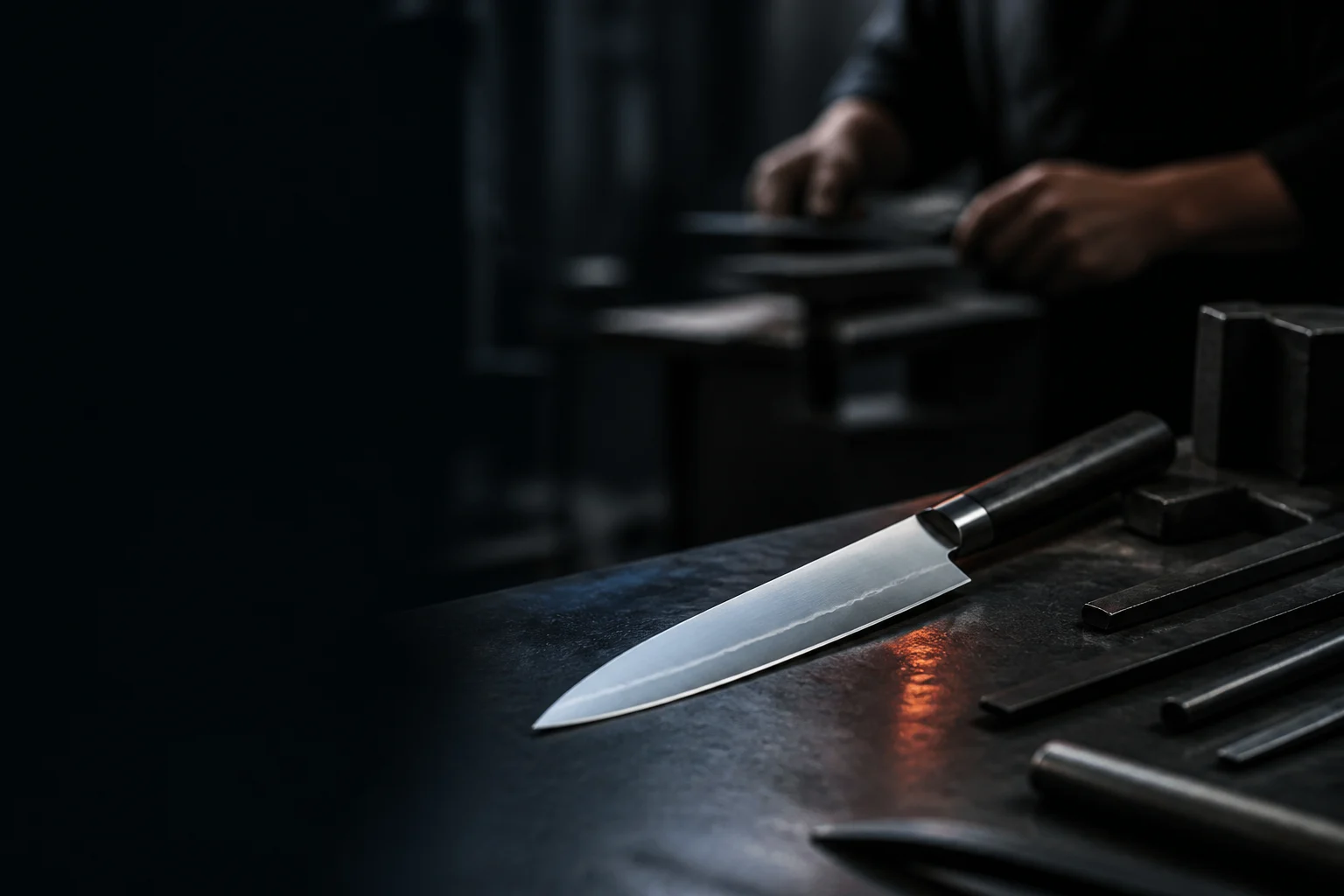
In the early 1980s, Yoshida Metal Industry gave designer Komin Yamada a brief: build a kitchen knife sharper and more durable than anything on the market, and make it last. Yamada spent two years on prototypes, testing steel grades, edge geometry and handle balance before the first Global knife left the Niigata forge.
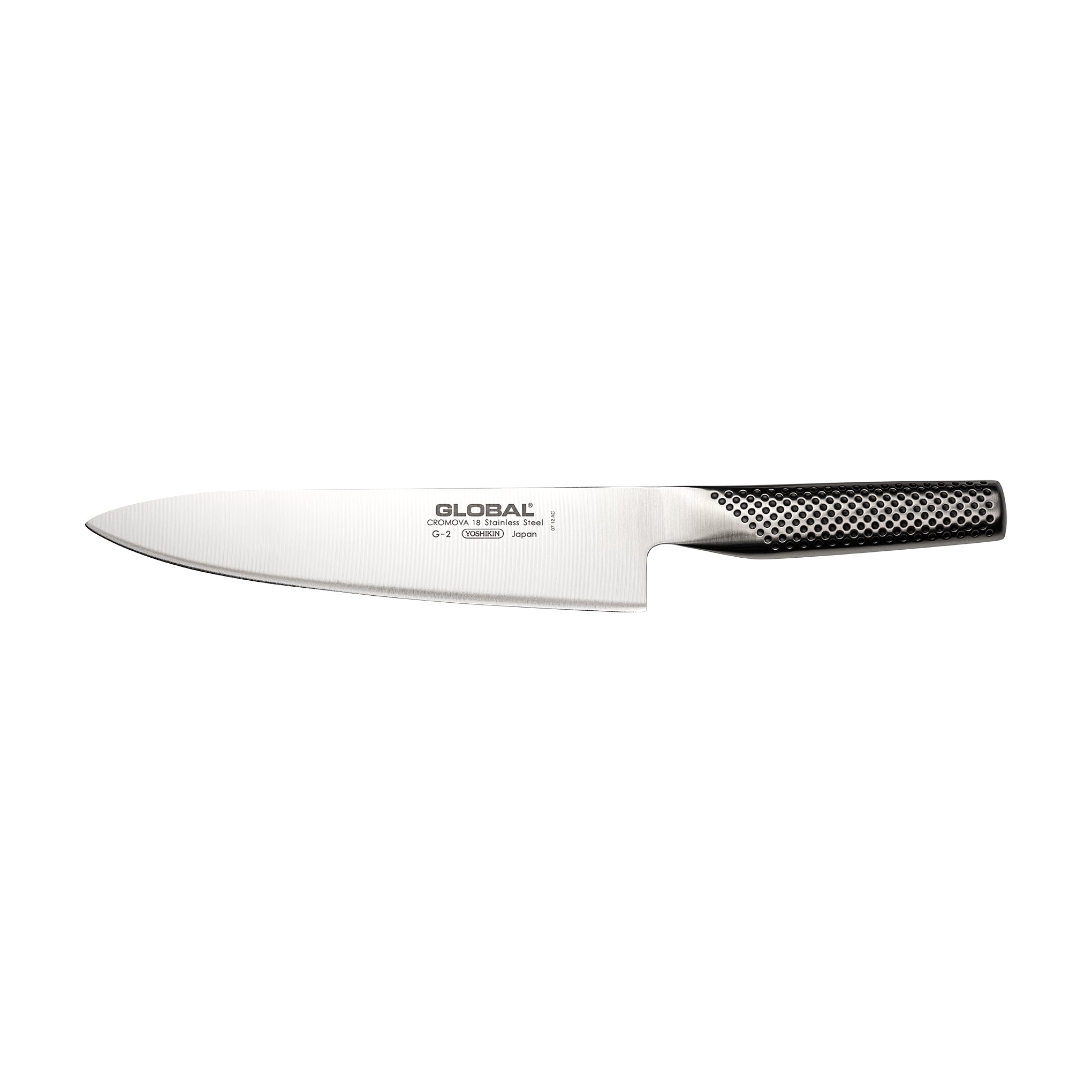
His answer was radical for its time. Instead of a blade riveted to wooden scales, the whole knife was one piece of stainless steel. The handle was hollow, filled with sand to tune the balance, and dimpled so it gripped even when wet. The edge was ground to 15 degrees per side, narrower than most Western knives.
That knife became the G-2 chef knife, and the design has barely changed in four decades because it solved the problem on the first try. Yoshida Metal Industry still forges every Global knife in the same Niigata factory.
Cromova 18 Stainless
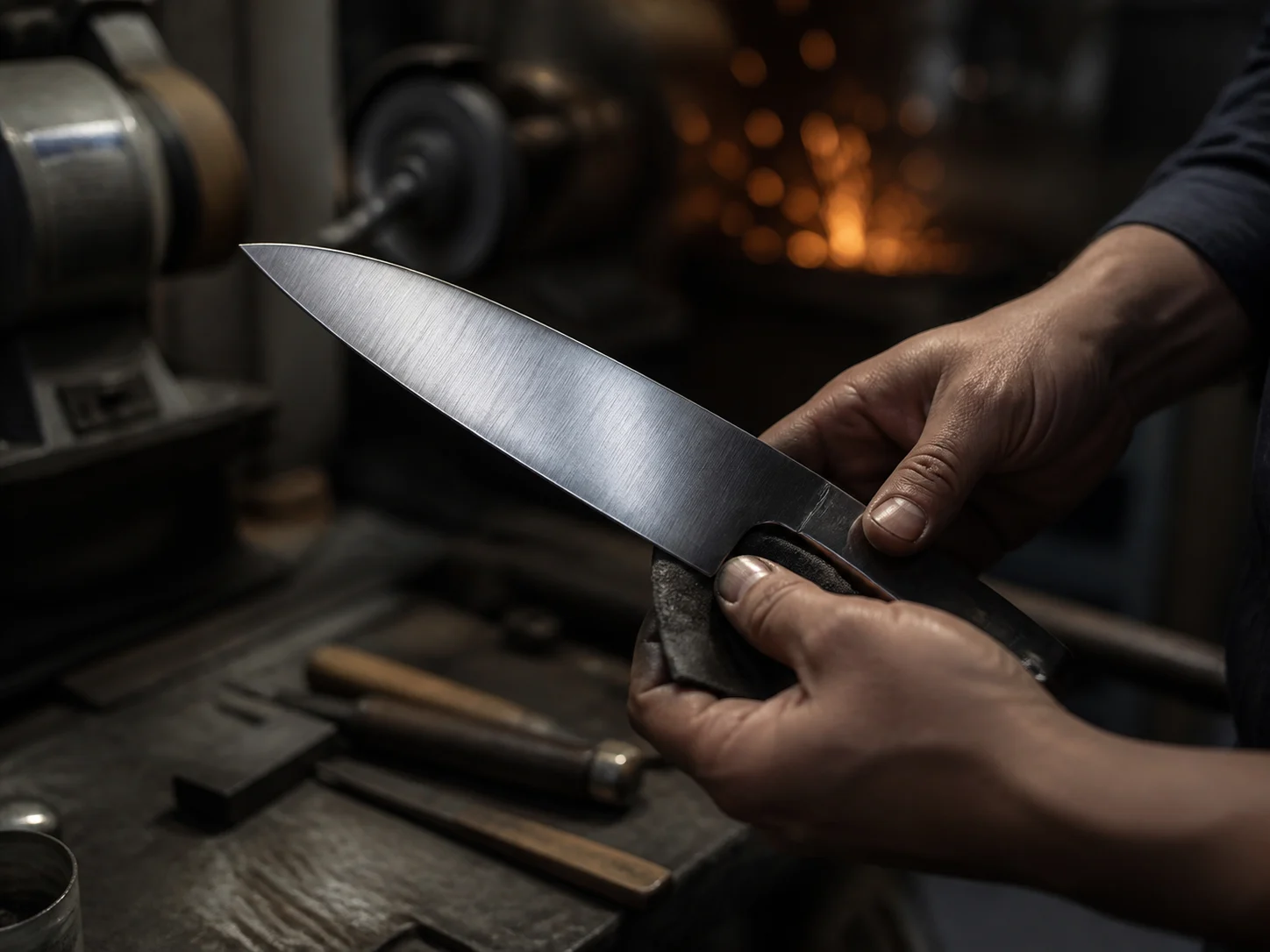
Global knives run on a steel you can't buy anywhere else. Yoshida Metal Industry developed Cromova 18 specifically for the demands of a kitchen edge.
Chromium
The 18 in Cromova 18 is the chromium content. It forms a passive layer that resists the acids and moisture a kitchen knife meets every day, so the steel stays clean with basic care.
HRC Hardness
Ice-hardened to 56 to 58 on the Rockwell C scale. Hard enough to hold a 15-degree edge through months of use, soft enough to sharpen back to true on a ceramic rod or whetstone.
Edge Alloying
Carbon for hardness, molybdenum for toughness, vanadium for a fine grain. The combination is what lets the edge take a thin 15-degree grind without chipping in normal use.
The Chef Knife That Made the Name
The Global G-2 is the 8 inch chef knife that put the brand on the map. It is the reference point every other Global knife is measured against, and the one most owners call their daily driver. Lightweight, perfectly balanced at the bolster, and sharp enough to slice paper out of the box.
Anthony Bourdain kept a Global G-2 on his board for years and talked about it often. He wasn't paid to. He just liked how it cut. That kind of unpaid endorsement from a working chef is hard to manufacture, and it's a fair part of why the G-2 is still the best-selling Global chef knife worldwide.
Shop the G-2How Komin Yamada Thought About a Knife
One Piece, No Joints
A riveted handle is a place for food to collect and a part that can fail. Yamada forged the whole knife from one billet, so there is nothing to come apart and nowhere for residue to hide.
Balance From Sand
The hollow handle is filled with dry sand, then sealed. The sand shifts the center of gravity to the bolster, where the index finger sits, so the knife feels lighter than it is.
Dimples That Grip
The dotted handle is the most recognizable detail on a Global knife. The dots are functional: they give the fingers purchase on smooth steel, especially when the hand is wet or oily.