Forged in Niigata, Japan since 1985

Global Knives

One-piece forged Japanese cutlery with a dimpled stainless steel handle and a 15-degree edge. The chef's knife Anthony Bourdain reached for, sharpened to the same standard home cooks and professionals trust every day.

1985
Founded in Niigata
15°
Edge angle
Cromova 18
Stainless steel
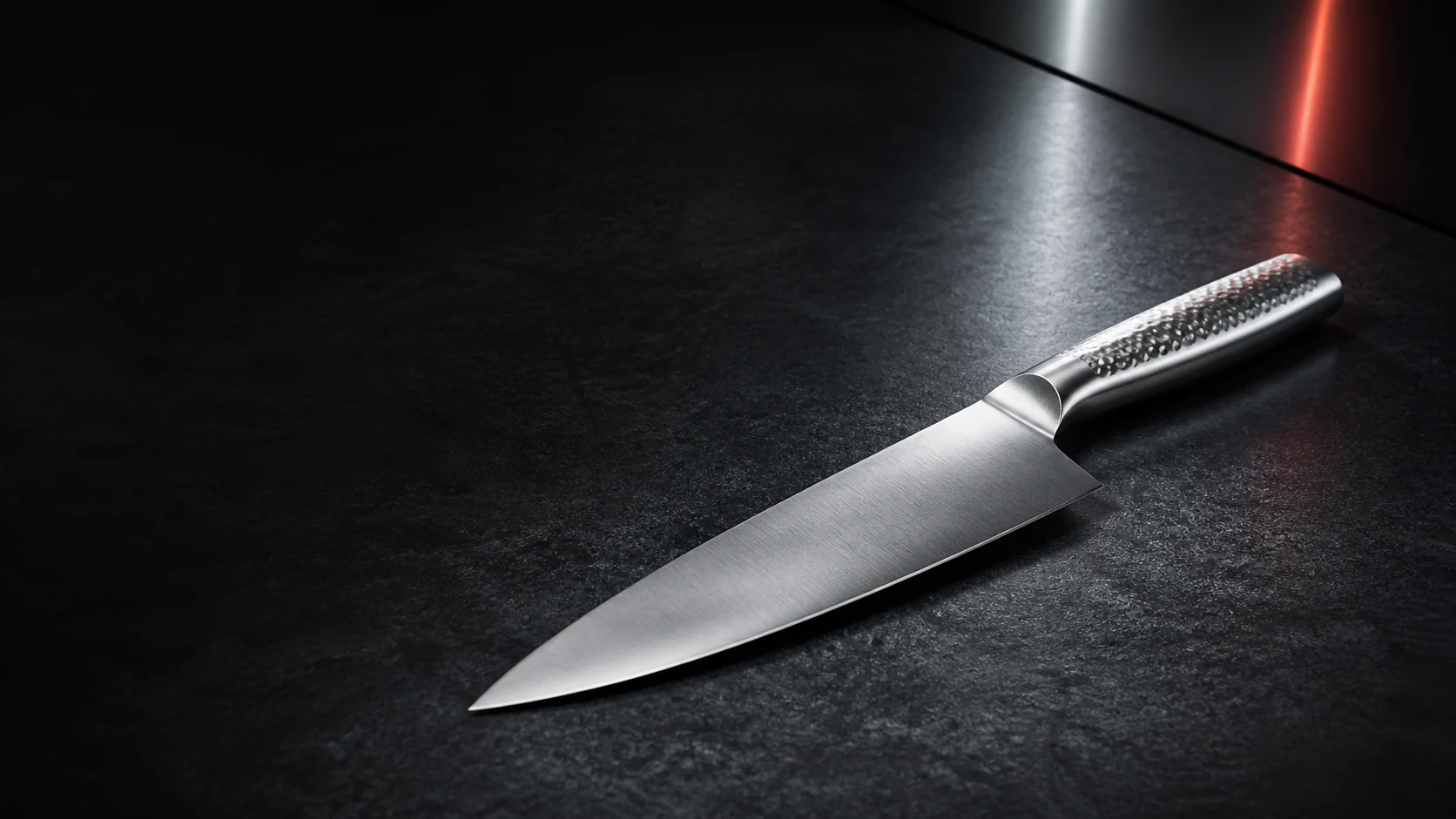
Editorial view of a stainless Japanese chef knife
Why Global

Knives Built to a Standard, Not a Price

Every Global knife is one piece of steel, forged and ice-tempered in Niigata. No rivets. No plastic scales. The handle is hollow and filled with sand for the right balance, dimpled so it stays put in a wet hand.

One-Piece Forged

Blade and handle are a single forging of Cromova 18 stainless steel. No joints to trap food, no rivets to loosen. The whole knife cleans in one wipe.

15-Degree Edge

Ground to a narrow 15-degree angle on both sides, sharper than most Western knives hold. Resharpened on a ceramic rod or whetstone in minutes.

Cromova 18 Steel

A proprietary stainless steel tuned to hold an edge and resist staining. Ice-hardened to 56-58 HRC, the sweet spot for sharpness and durability.

Signature Pieces

Three knives cover most of what a home kitchen asks for. The G-2 chef knife does the heavy work, the santoku handles vegetables, and the paring knife finishes the small jobs.

Niigata, 1985

One Designer. One Forge. One Standard.

Komin Yamada was asked to design a knife that would outperform anything on the market and keep doing it for decades. He worked for two years on prototypes. The result was the first Global knife: one piece of Cromova 18 stainless steel, ice-tempered, with a hollow handle filled with sand for balance and a dimpled grip that locks in the hand.

Forty years on, Global cutlery is still forged in the same Yoshida Metal Industry workshop in Niigata. The design has barely changed because it didn't need to.

Read our full story
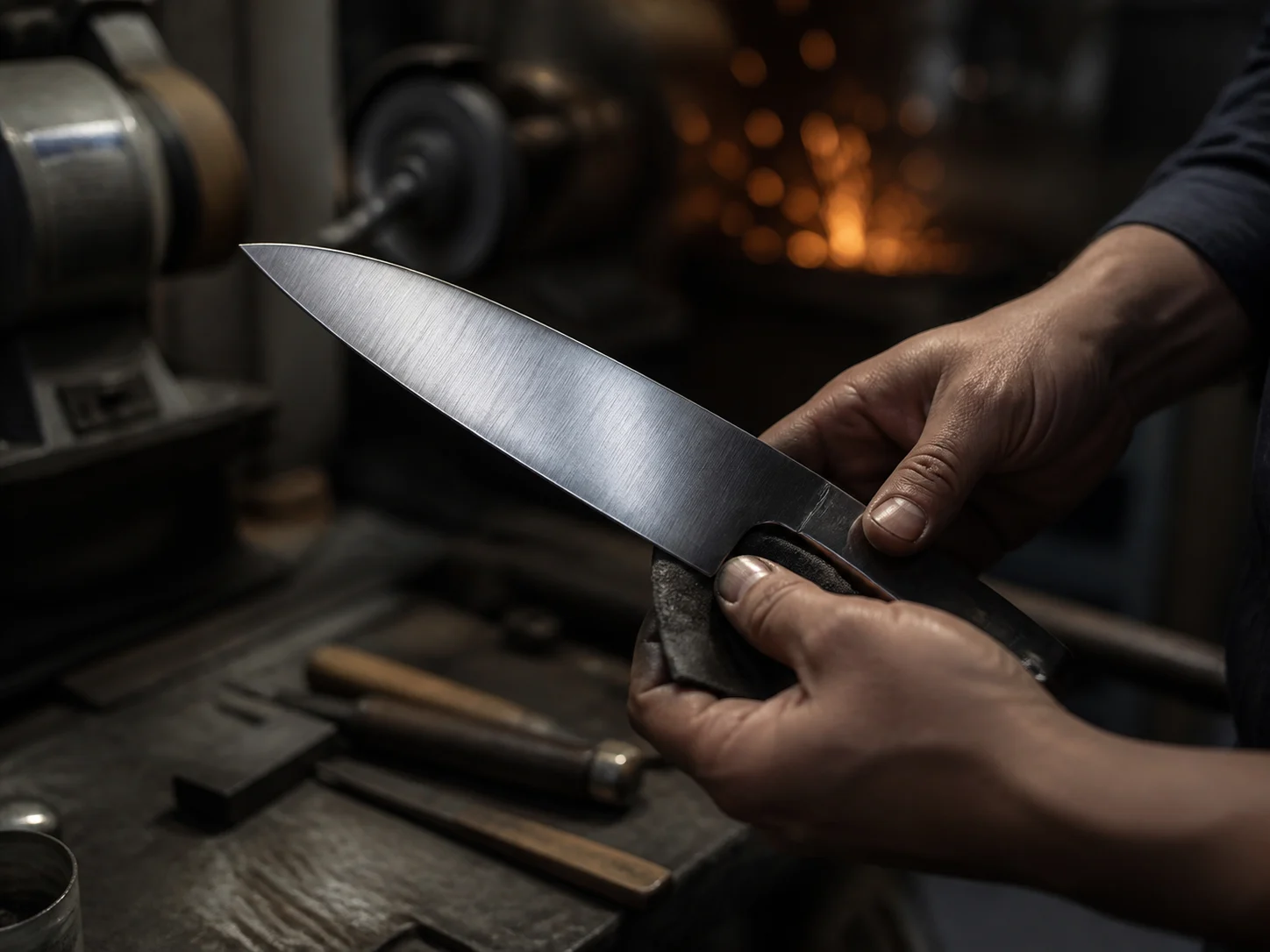
Hands finishing a stainless chef knife in a metalworking workshop
The Collection

Global Knives by Type

From the classic G series to the refined Sai line, every Global knife shares the same forged construction and 15-degree edge. Browse the range to find the right blade for the job.

Global G-2 classic chef knife
G Series

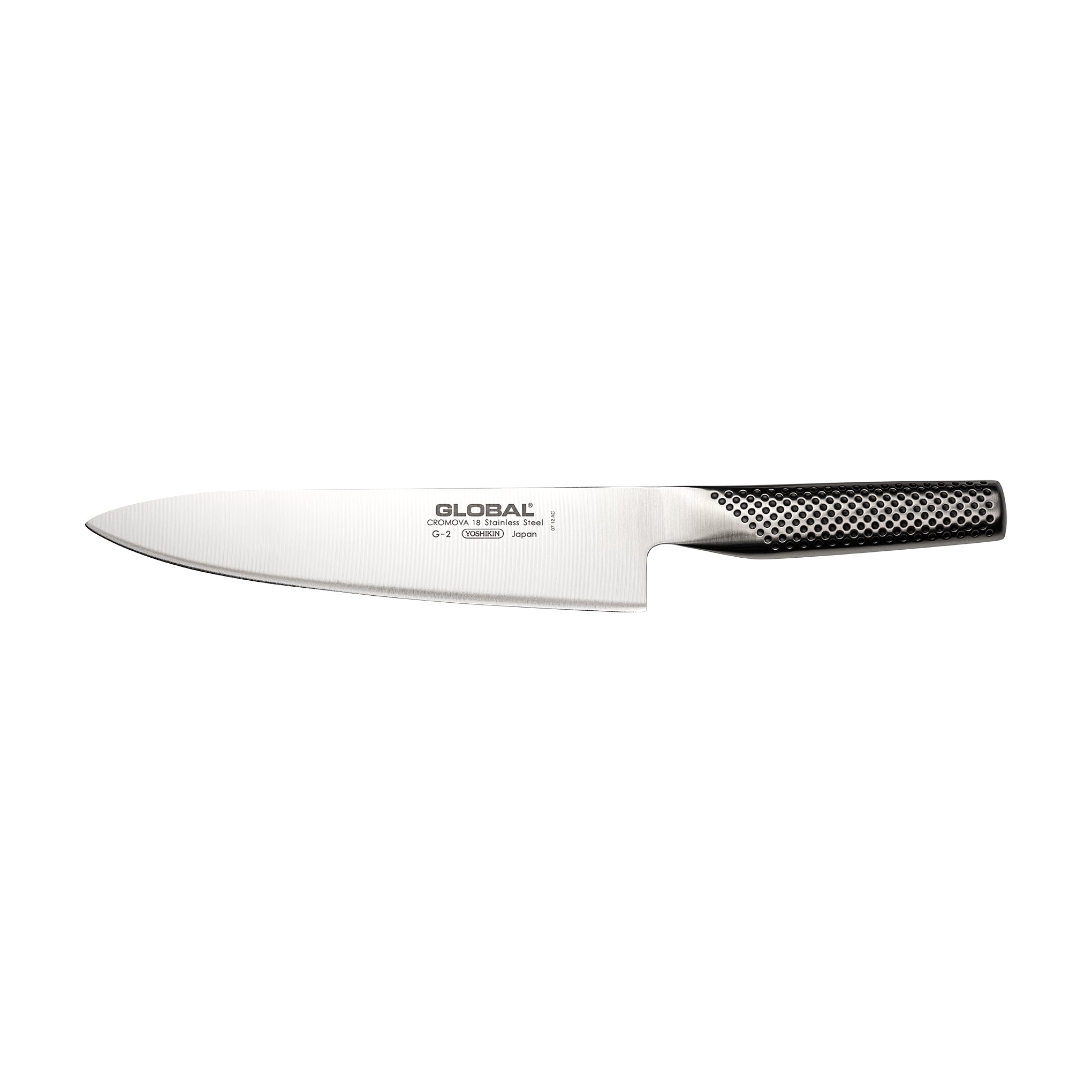
G-2 Classic Chef Knife

The 8 inch Global classic chef knife. The reference point for the whole range.

Check Price
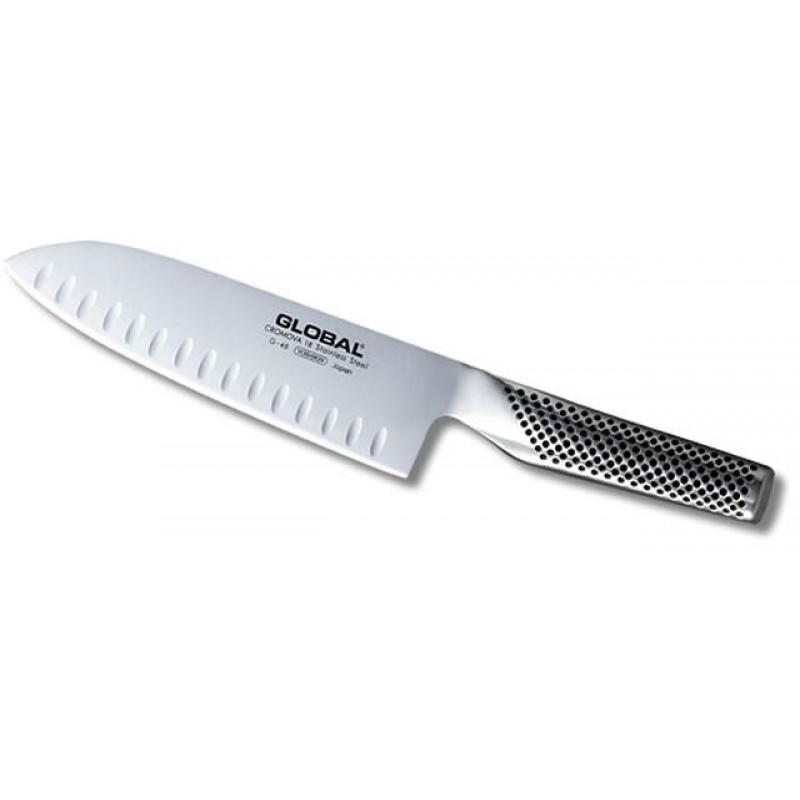
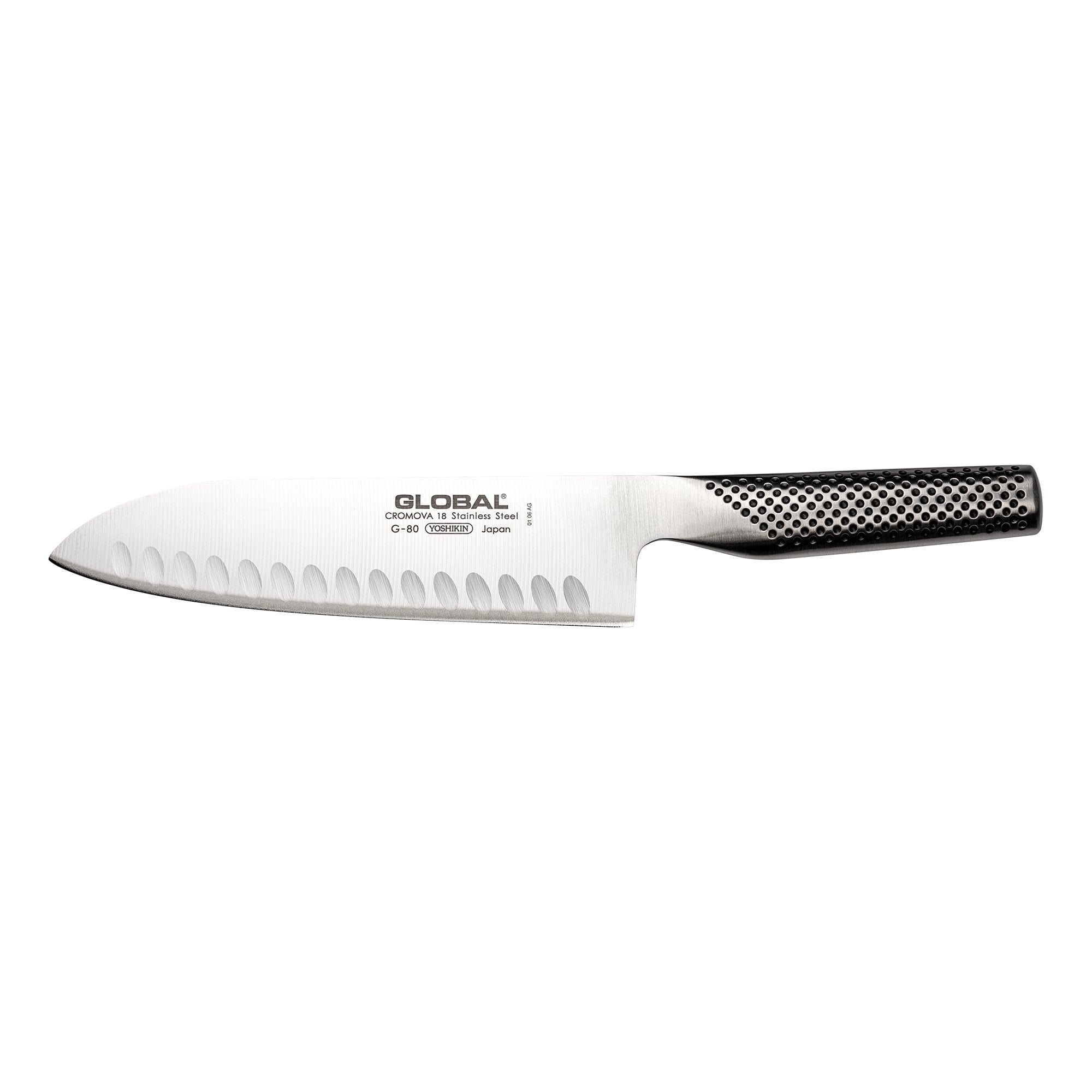
Global santoku knife
Santoku

G-80 Santoku 18 cm

A Global santoku for vegetables and precise slicing. Lighter than a chef knife.

Check Price
Global bread knife serrated
Bread Knife

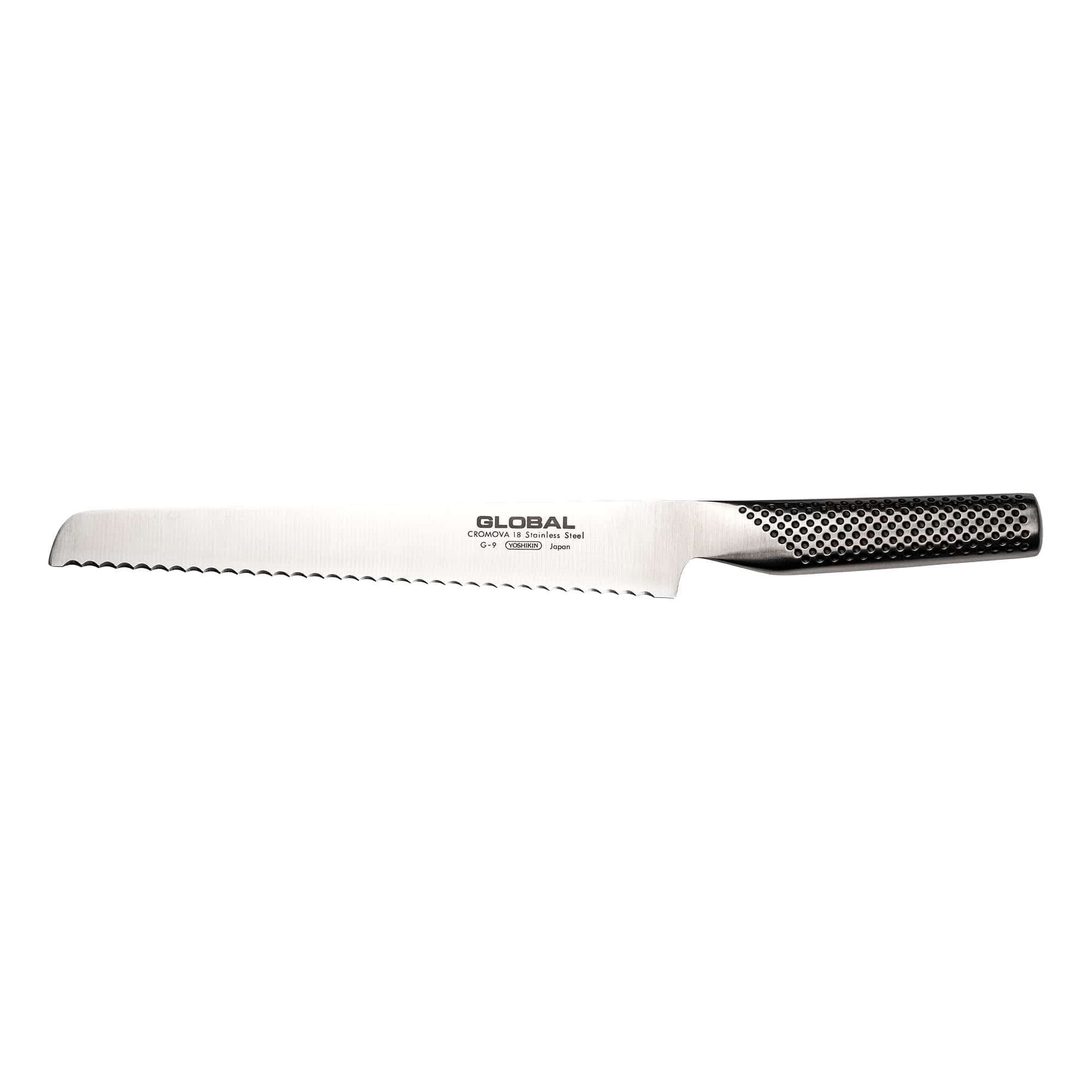
G-9 Bread Knife

Serrated Global bread knife that saws through crusts without crushing the loaf.

Check Price
Global utility knife
Utility

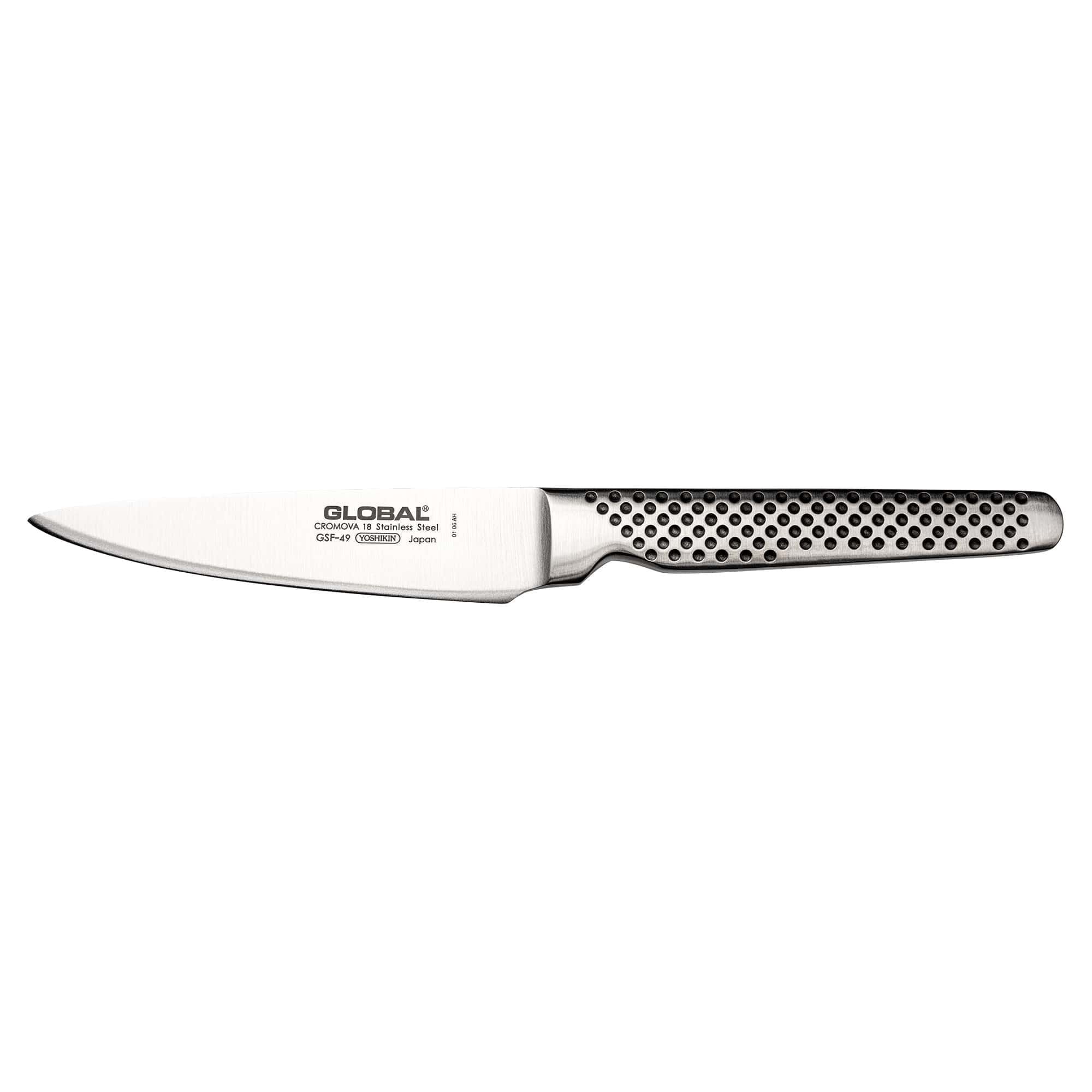
GSF-49 Utility Knife

A mid-size Global utility knife for the jobs between a paring and chef knife.

Check Price
Global boning knife
Boning

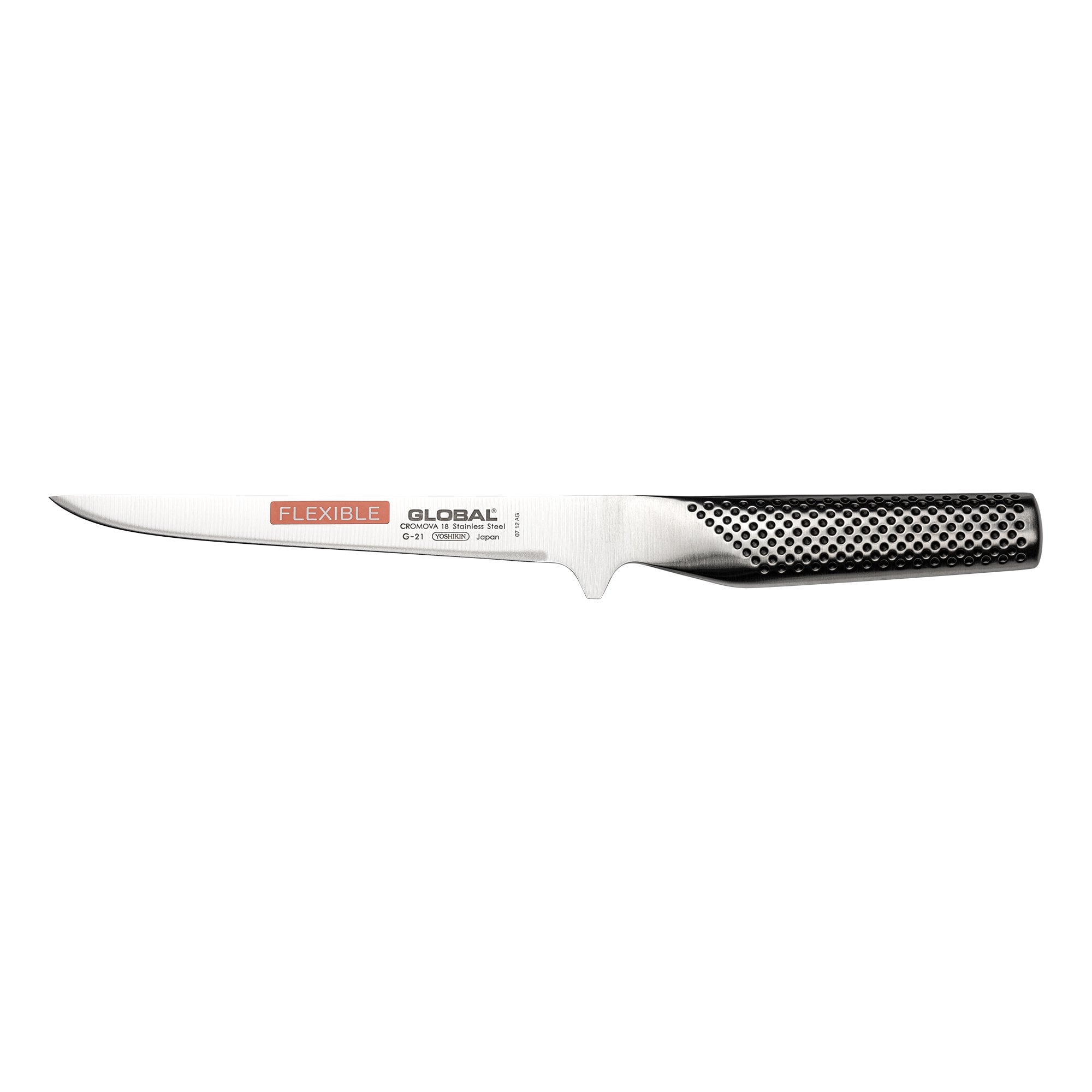
G-21 Flexible Boning

A flexible Global fillet and boning knife that follows the contour of the bone.

Check Price
Global vegetable knife
Vegetable

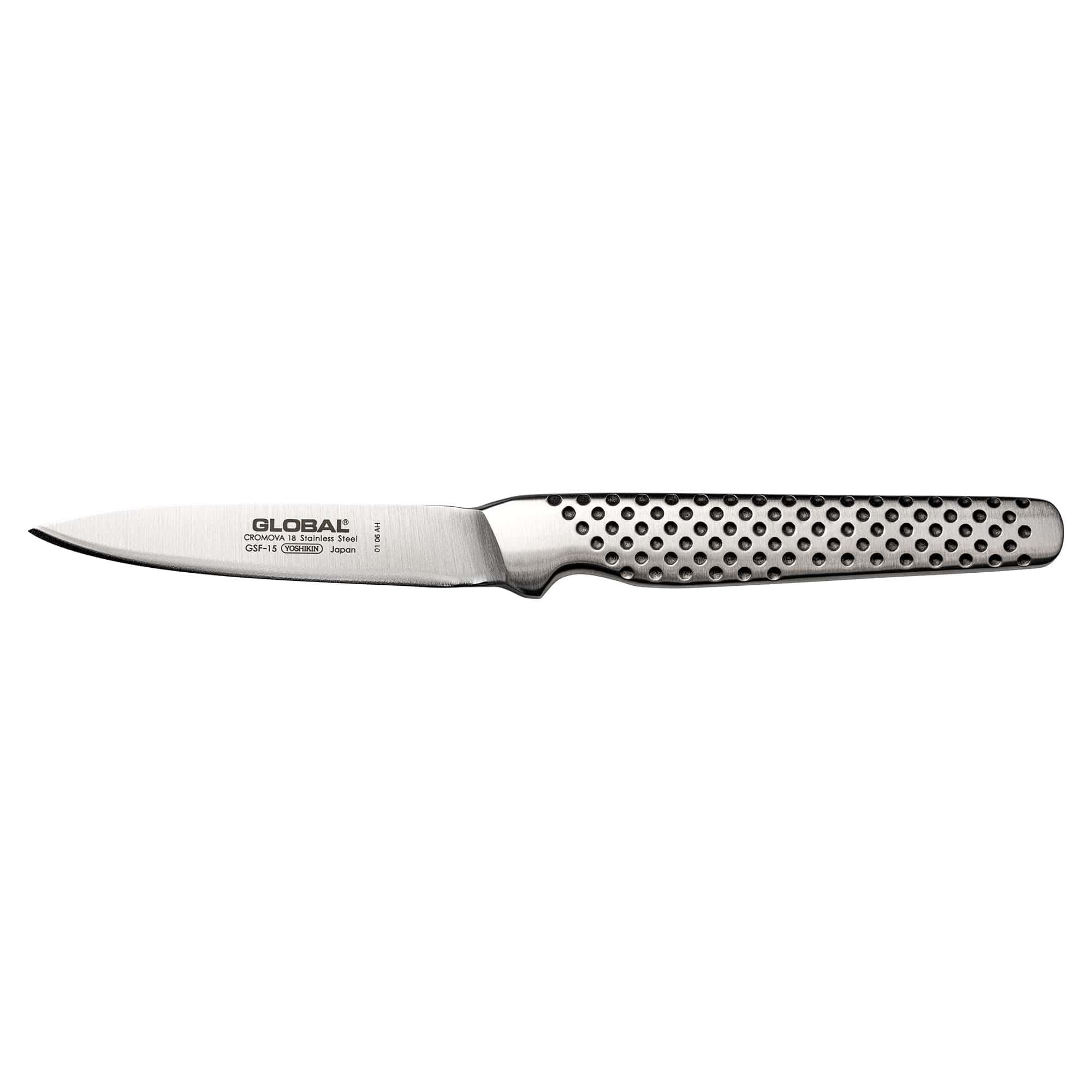
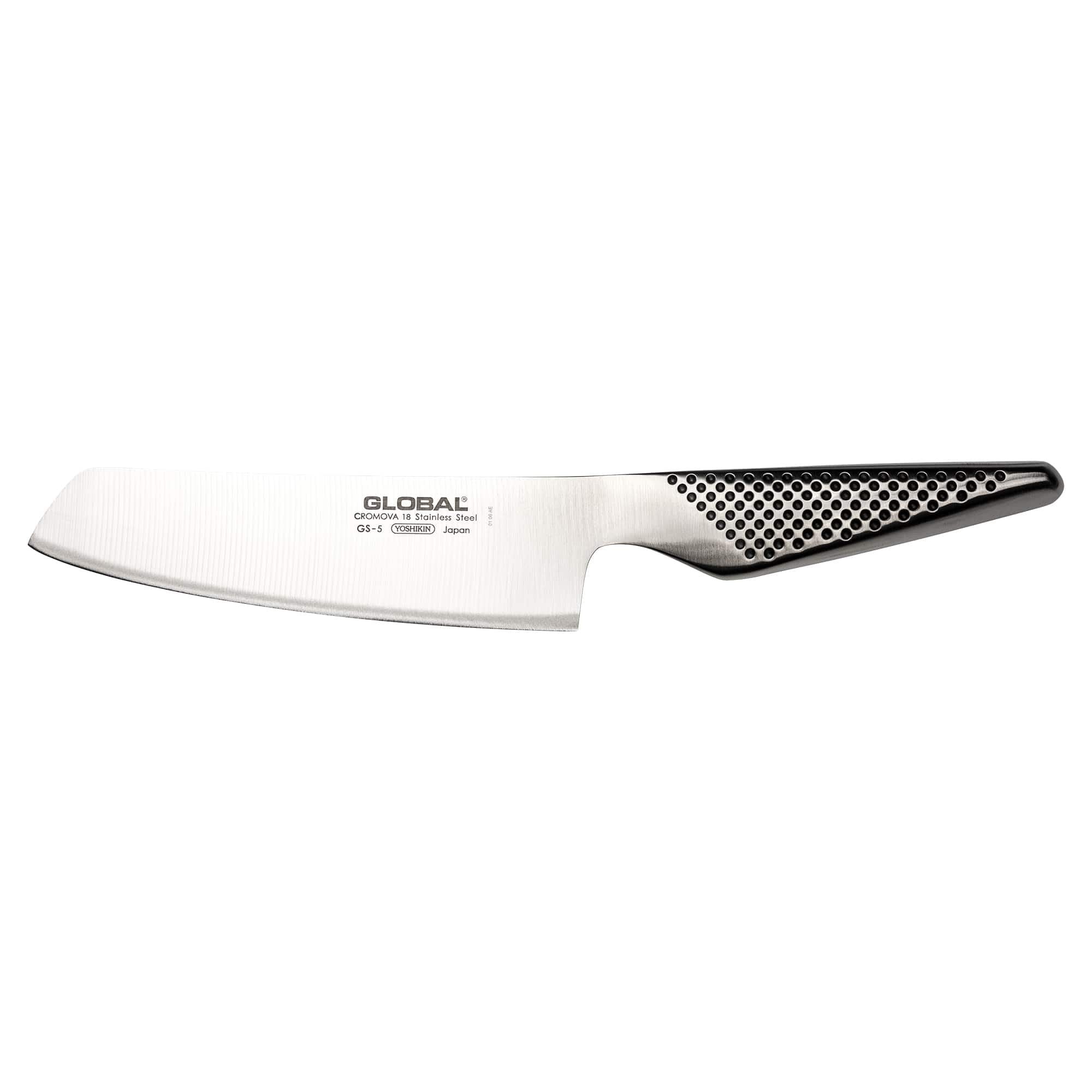
GS-5 Vegetable Knife

A compact Global vegetable knife for prep work. Straight edge, clean cuts.

Check Price
Global kiritsuke knife
Kiritsuke

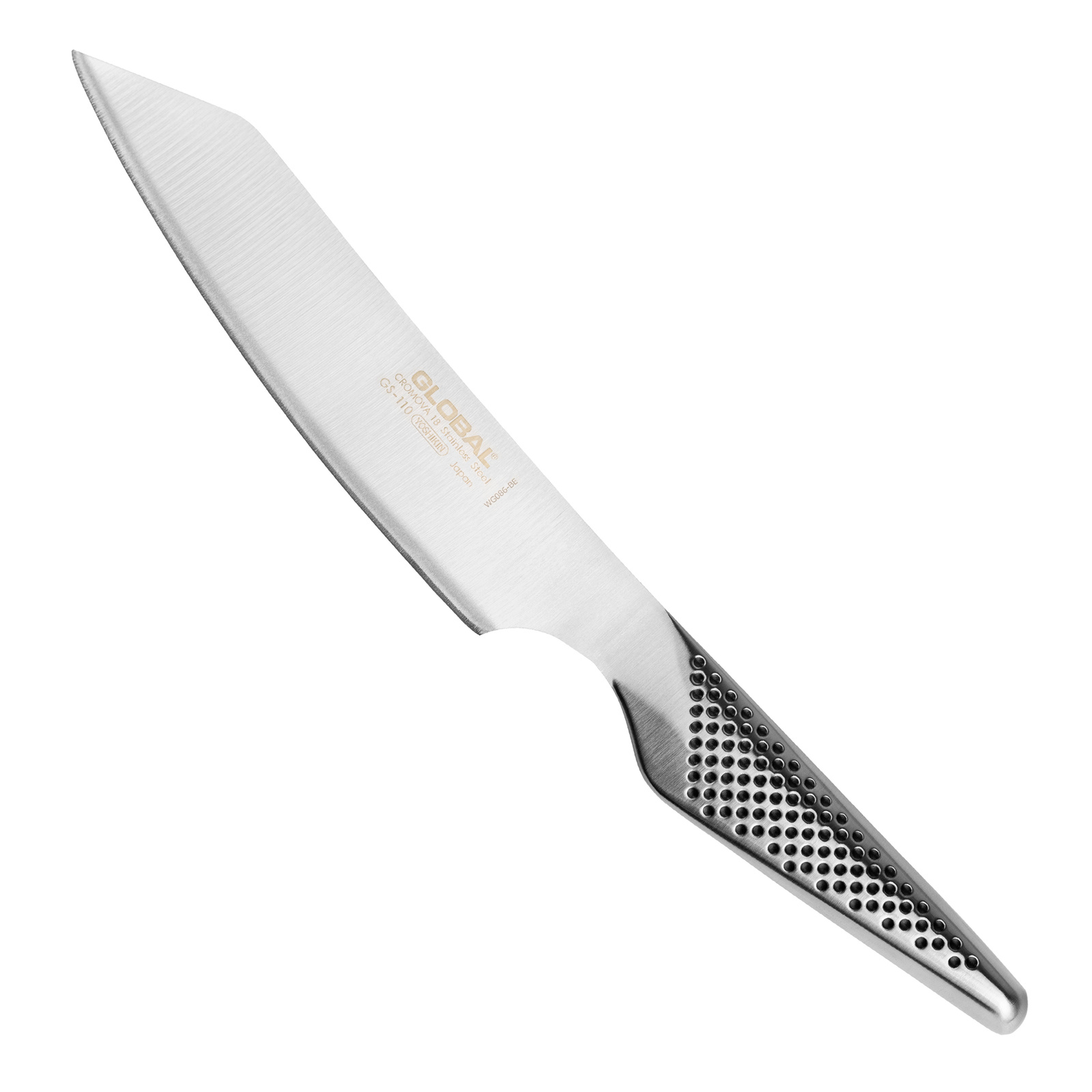
GS-110 Kiritsuke

A Global kiritsuke knife with a clipped tip. A hybrid of chef and slicer.

Check Price
Global knife sharpener ceramic rod
Sharpening

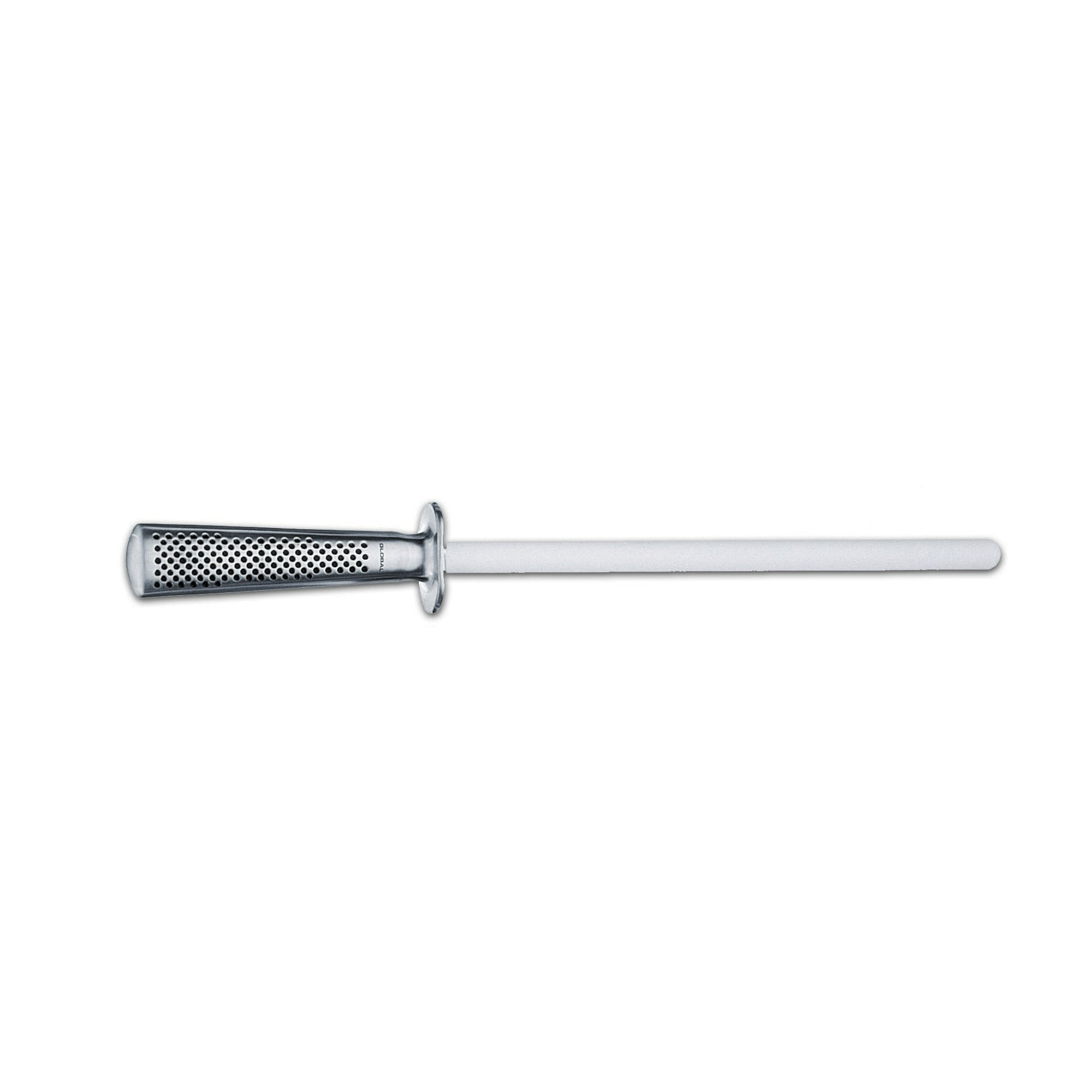
Ceramic Sharpening Rod

A Global ceramic knife sharpener to keep your edge true between whetstone sessions.

Check Price
The Engineering

What Makes a Global Knife Hold Its Edge

18

Cromova Stainless

A proprietary steel with 18% chromium for stain resistance, balanced with carbon and molybdenum to hold a 15-degree edge through months of daily use.

15°

Per Side Edge

Ground to 15 degrees on each side, narrower than most Western blades. Resharpen on a ceramic rod at the same angle, or a 1000 grit whetstone when it needs real work.

1

Piece Forged

Blade, bolster and handle are one forging. The hollow handle is filled with sand to dial in balance, then dimpled so the grip holds even when wet.

Track Record

Four Decades of the Same Standard

40+
Years forged in Niigata
1
Piece of Cromova 18 steel
56-58
HRC hardness
50+
Countries where Global is sold
Reviews

What Cooks Say About Global

★★★★★

"I bought the G-2 eight years ago and it's still the first knife I grab. Sharpened it twice on a whetstone in all that time. The balance is what sells it, the handle just disappears in your hand."

Marcus K.Portland, OR
★★★★★

"Switched from a heavy German chef knife to the Global santoku and my prep got noticeably faster. The scallops actually do keep cucumber slices from sticking. Wish I'd moved sooner."

Aisha R.Brooklyn, NY
★★★★★

"Worked line kitchens for twelve years. Globals aren't the cheapest but they hold up and they sharpen back to new. The 15-degree edge cuts cleaner than anything at this price."

Daniel T.Austin, TX
Questions

Global Knives FAQ

Are Global knives good?

Yes. Global knives have been a benchmark for Japanese cutlery since 1985 because they hold a 15-degree edge, balance well in the hand, and clean easily as a one-piece forging. They suit both home cooks and working chefs who want one knife to do most tasks.

Are Global knives overrated?

Some enthusiasts move on to harder, thinner carbon-steel knives over time and call Global a beginner knife. That framing misses the point. Global is overbuilt for daily use, easy to maintain, and consistent across batches in a way most boutique makers can't match. For a cook who wants one reliable knife for a decade, it earns its reputation.

Where are Global knives made?

Global knives are forged in Niigata, Japan by Yoshida Metal Industry, the workshop where Komin Yamada's original 1985 design first went into production. The same factory makes the knives today.

Are Global knives cheaper in Japan?

Often yes, though it depends on the model and the exchange rate. Buying in Niigata or Tokyo department stores saves the import margin and sometimes the local sales-tax for tourists. Outside Japan, authorized retailers run sales that can match or beat the Japanese street price, so compare the landed price before assuming a trip purchase is cheaper.

Are Global knives forged or stamped?

Forged. Each Global knife is forged from a single piece of Cromova 18 stainless steel, then ice-hardened. The handle is not a separate part welded on. It is part of the same forging, hollowed and filled with sand for balance.

Are Global knives dishwasher safe?

No. Global knives should be hand washed with mild detergent and dried right away. Dishwasher heat, detergent and rattling against other items will dull the edge and can pit the steel over time. The handle's sand filling also makes dishwasher cycles a bad idea.

Are Global knives hard to sharpen?

No, they're forgiving for a Japanese knife. Cromova 18 hardens to 56 to 58 HRC, softer than high-end powdered steels, so it sharpens quickly on a whetstone and responds well to a ceramic rod. The only thing to avoid is a fixed-angle pull-through carbide sharpener, which will chew the 15-degree edge. Freehand on a stone at 15 degrees per side is the right method.

How do I sharpen Global knives?

For routine maintenance, run a Global ceramic sharpening rod along the edge at 15 degrees per side. When the knife needs a real refresh, use a 1000 grit whetstone to reset the edge, then a 3000 grit to polish. Global knives are not designed for pull-through sharpeners with fixed carbide slots.

How do I care for Global knives?

Three habits keep a Global knife in shape. Wash and dry it by hand right after use. Hone it on a ceramic rod every few sessions to realign the edge. Cut on wood or soft plastic boards, never glass, stone or metal. Store it on a magnetic strip or in a block so the edge never touches other blades.

How do I clean Global knives?

Warm water, mild dish soap, and a soft sponge. Wipe the blade from spine to edge so you don't drag the sponge across the cutting edge. Rinse and dry immediately with a cloth. For stuck-on food, soak the blade briefly, never scrub with steel wool or scouring powder, both of which scratch the finish.

How do I store Global knives?

A magnetic knife strip on the wall is ideal because the edge never touches anything. A wooden knife block works too, slot the knife in spine-first to protect the edge. A drawer insert with individual slots is fine if the drawer stays dry. Avoid loose drawer storage where blades clang together, which chips edges fast.

Where to buy Global knives?

Global knives are sold through authorized retailers in over 50 countries, plus specialty kitchen stores and the official shop. For the full range and current pricing, visit the official Global shop. If you need help finding a local stockist, use our contact form.

Are Global knives worth the money?

For most cooks, yes. A single Global chef knife like the G-2 replaces a drawer of cheaper blades that lose their edge quickly. With basic care and occasional sharpening, owners report decades of use from the same knife. The one-piece forging also means there is nothing to break or come loose.